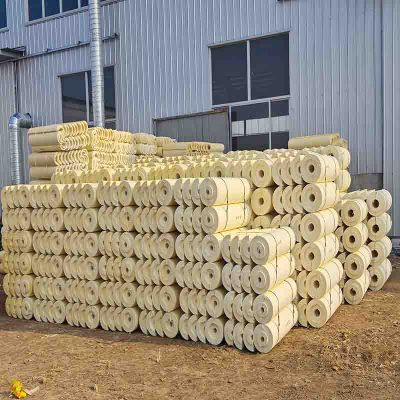
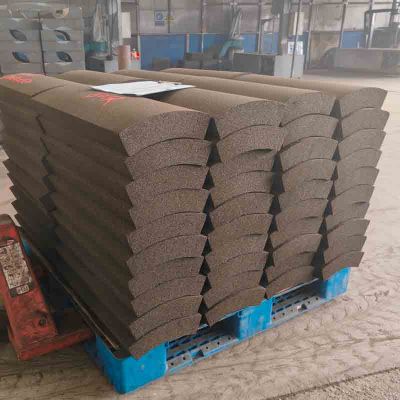
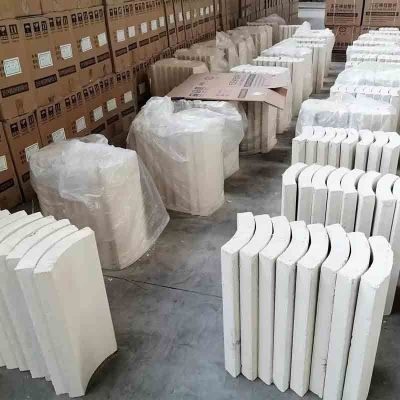
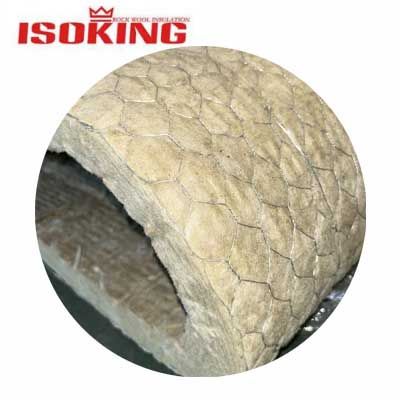
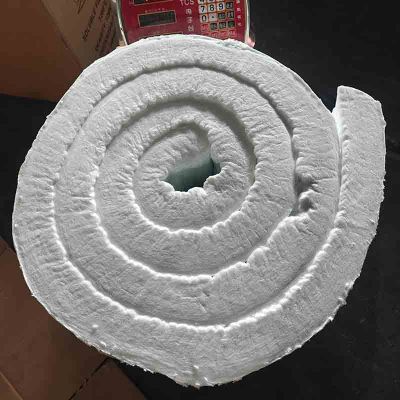
Stone wool pipes are mainly made of basalt, slag, etc., which are processed by high-temperature smelting and made into artificial inorganic fibers with the help of high-speed centrifugal equipment. Then, binders and dust-proof oil are added to them, followed by a heating and curing process, and finally various specifications of stone wool insulation pipes are formed.
Stone insulation wool pipes use basalt, slag, and other materials as the main raw materials. After high-temperature melting, the raw materials are converted by high-speed centrifugal equipment to pull the high-temperature melt of basalt cotton stone into non-continuous fibers of 4 to 7 μm. After that, add appropriate amounts of binders, dust-proof oils, water-repellent agents, and other additives. The binders help the fibers to better combine together and enhance the stability of the overall structure; dust-proof oils can reduce the generation and flying of dust; water-repellent agents can improve the waterproof performance of the product. Then go through sedimentation, curing, and other treatment processes. The sedimentation process allows the stone wool fibers to accumulate and reach a certain thickness and density; curing allows the various additives added to fully play their role under certain temperature and time conditions, so that the stone wool insulation pipes form a solid structure. Thus, stone wool insulation pipes of various specifications that meet different needs are made. It can be widely used in the insulation of boilers and equipment pipelines in various industries such as chemical, petroleum, metallurgy, shipbuilding, and textiles. It is also used in the insulation of partitions, ceilings, and internal and external walls in the construction industry.

In actual production, in order to ensure the quality and performance of stone insulation pipes, it is also necessary to strictly control the process parameters of each link, such as the ratio of raw materials, high-temperature melting temperature, centrifugal speed, amount of additives, curing time and temperature, etc. At the same time, the quality of the finished product must be tested to ensure that it meets the relevant standards and requirements.

The common specifications and models of stone insulation wool pipes are as follows:
1. Inner diameter, common ones are 22mm, 28mm, 34mm, 43mm, 48mm, 60mm, 76mm, 89mm, 108mm, 114mm, 133mm, 140mm, 159mm, 169mm, 194mm, 219mm, 245mm, 273mm, etc.
2. Common specifications of wall thickness are usually between 25mm and 100mm, including 25mm, 30mm, 40mm, 50mm, 60mm, 70mm, 80mm, 90mm, 100mm, 125mm, 140mm, 150mm, 175mm, 200mm, etc.
3. The length is 1000mm.

For example, in some small HVAC pipe systems, stone wool insulation pipes with an inner diameter of 22mm to 60mm, a wall thickness of 25mm to 50mm, and a length of 1000mm may be used more. In large industrial pipes, an inner diameter of 159mm or more, a wall thickness of 60mm to 100mm, and a length of 1000mm are more common.
Of course, we can customize and produce different specifications according to the special needs of customers.